

Board of director candidates share statements for 2027 JEA election
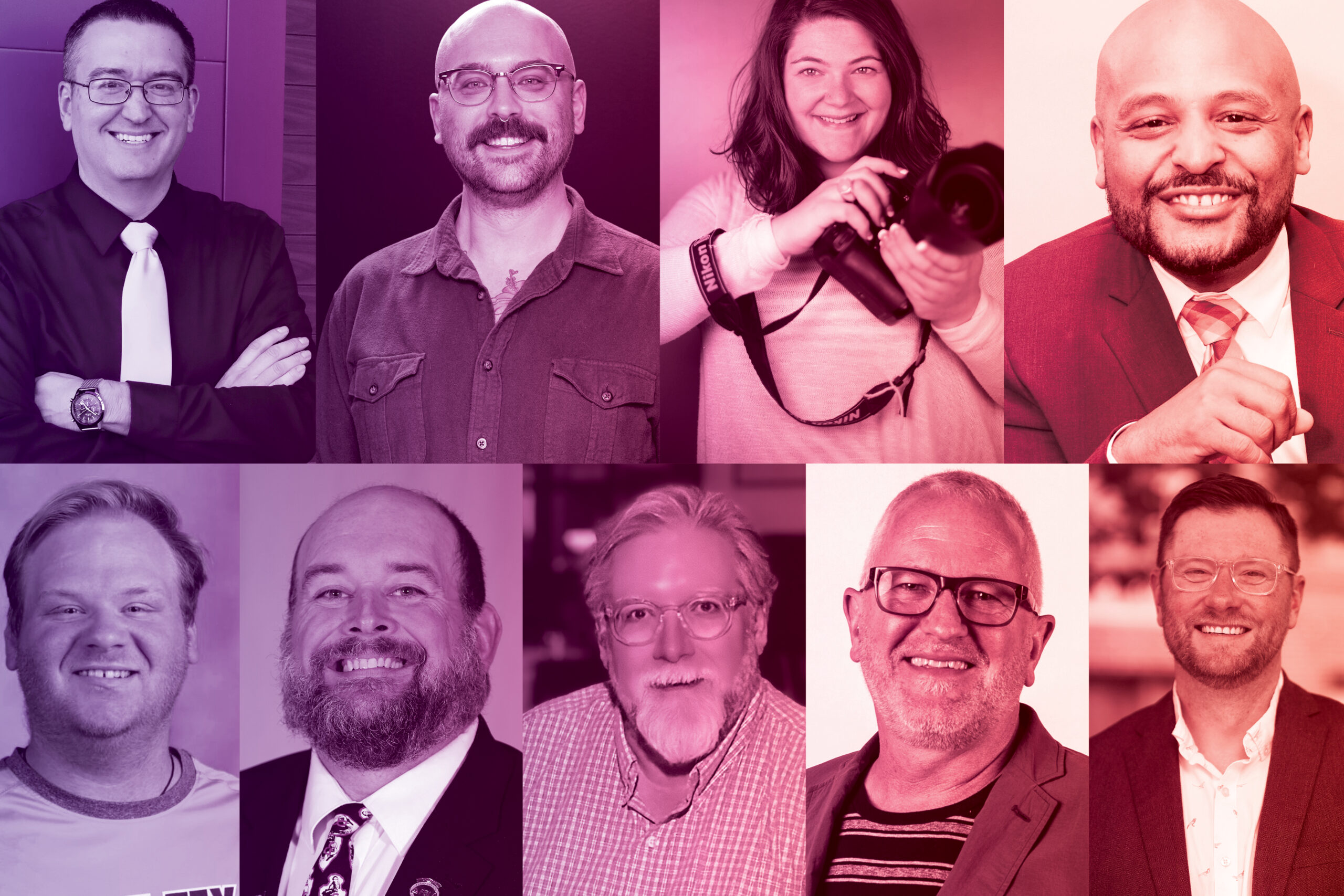
View current election timeline here.
2027-29 term slate of candidates
President
- Justin Daigle, MJE | Brighton High School | Brighton, Colorado
Vice President
- Tucker Love | Shawnee Mission South High School | Overland Park, Kansas
Director-at-large (2 positions)
- Makena Busch, CJE | Mead High School | Spokane, Washington
- Dr. PJ Cabrera, MJE | University of Texas, San Antonio | San Antonio, Texas
- Daniel Ryan Carr, CJE | Ray Braswell High School | Aubrey, Texas
- Kyle Carter, CJE | Westwood Baptist Academy | Poplar Bluff, Missouri
- Vincent DeMiero, MJE | Mountlake Terrace High School | Mountlake Terrace, Washington
- Dr. Timm Pilcher, MJE | Drake University | Des Moines, Iowa
Educational Initiatives Director
- Joseph Maffey, CJE | Lyons Township High School | LaGrange, Illinois
Candidate statements
Candidate for President
Justin Daigle, MJE, Brighton High School (Brighton, Colorado)
Why do you want to serve, and how will you help advance JEA’s mission?
Over the past four years as vice president of JEA, I have had the best experience. I have been fortunate to collaborate with so many amazing journalism advisers who serve as committee members, state directors and board members. We hosted onsite training for student journalists and advisers in New York, Virginia, Iowa and Texas through our Partner Projects. We have strengthened our relationship and partnership with the National Scholastic Press Association to continue to organize and create strong convention experiences for our membership. We have been intentional in selecting a diverse group of voices to present at JEA Advisers Institute, write articles for CJET and encouraged to serve in leadership roles in the organization.
We have accomplished so much together, but there is still so much work left to do. And I want to continue to be part of that work. As JEA president, I want to continue to take on a bigger role in the journalism community advocating for student journalists and programs, mentoring advisers and contributing to the overall discussion of scholastic journalism in any way I can. Anyone who knows me knows that I will do whatever I can to support others, and when I start something, I finish strong.
JEA and its mission means a lot to me and has been a driving force in shaping me as a journalism adviser. Being mentored by former JEA presidents Val Kibler, Sarah Nichols, Mark Newton and Jack Kennedy, I want to continue the work and foundation they have set for us. Let’s continue to work together to provide the best curriculum and resources to our JEA members.
What do you think is the greatest challenge facing scholastic journalism education today?
Ask any adviser and they will say, “being a publications adviser is rough.” Since the pandemic, we have made great strides to rebuild, and for some, sustain our programs. Something that can’t be ignored is how advisers are leaving the professions of teaching and/or advising. From state organizations to leaders and volunteers within JEA, we all are trying to develop ways to provide resources and support to advisers.
Supporting advisers is something very important to me, so when Val Kibler asked if I would be part of the JEA Partner Project four years ago, I jumped at the opportunity. Through this project, I worked with Sarah Nichols and AJ Chambers to support a young adviser and his journalism programs in Queens, New York. Over Zoom, we met with him and his students to discuss their goals for the year. We then traveled to New York to train his students. As I spoke with the advisers at the school, they all were early in their careers and were grateful to have resources like JEA and the project to share with them the things they didn’t know. Since then, I went to both Virginia and Ohio continuing this same work.
Serving as JEA Mentor, I have been able to help newer advisers who have joined our profession. My mentees have shared that they were grateful just to have someone who listened and helped them create an action plan to move forward. To be honest, whether we are new in our career or have been around 30 years, we all need our journalism community. I am grateful for the friendships I have created with other advisers who have become my besties. We all need our lifelines, and JEA can be that for so many people. I know it has been for me.
Why do you believe your voice is an important voice or perspective that needs to be heard?
As the next JEA president, I know that my voice not only represents me, but more importantly, the 2,600+ members in our organization. Every voice matters. It is my duty and responsibility to make decisions and provide support to every voice in JEA.
What my voice brings is 23 years of educational experience and a hunger for growth and reflection to share with our membership. As a Career and Technical Education adviser, I can share my journey of transforming my yearbook program into a multimedia pathway where students can earn their Adobe certifications. As a champion for the First Amendment, I can share how I have built a supportive partnership with my administrative team at my school who understand the state law and support my students’ voice. Serving as vice president and state director in JEA, I can share our story as an organization as I have gained so much institutional knowledge that can support more advisers that we onboard as mentees, mentors or in leadership roles.
Being a journalism adviser has made my teaching career special. I have been inspired by so many students and advisers at BHS, in Colorado and across the nation. I want other adviser friends to feel that same love and inspiration in their roles. The work we do is so important, and isn’t getting any easier. We can and must find ways to support our fellow advisers to stay in this incredible profession.
Candidate for Vice President
Tucker Love, Shawnee Mission South High School (Overland Park, Kansas)
Why do you want to serve, and how will you help advance JEA’s mission?
JEA has been a part of my life since I was 15 years old. I only attended one national convention as a high school journalist — the 2010 Kansas City convention — but I know I benefitted from the resources and opportunities JEA offered to advisers and students during my time in high school. As a first-year journalism teacher in 2018, I knew that being a member of JEA would be incredibly beneficial to my growth as a young teacher so I joined as a lifetime member. I saw the value in the educational resources that could be used in my classroom, the network of advisers across the country that I could go to for support or guidance, and the opportunities to take my own students to conventions, participate in contests, and grow from the experience.
JEA has given me numerous opportunities to grow, learn and lead over the last eight years of advising. Being recognized as a Distinguished Yearbook Adviser of the Year and the opportunity to serve as the local chair for the 2024 Kansas City NHSJC are two recent examples of how lucky I am to be in the JEA community. At this point, the opportunity to serve as vice president on the board would allow me to give back to an organization that continues to pour time and resources into the lives of so many publication advisers and scholastic journalists around the country and globe.
What do you think is the greatest challenge facing scholastic journalism education today?
I think that we are facing a significant challenge with a lack of understanding what we consume, fueled by anti-news media rhetoric perpetuated by free press hostility at the federal level of government and a continued reliance and push to use generative AI.
As journalism teachers — whether that be a full teaching load of beginning journalism and publications classes or just advising the yearbook — I think a significant responsibility in our content area is to teach students to think about the media they are consuming and producing. The yearbook is a history book of our school year which should demonstrate journalistic storytelling about the things that happened, both in the school community and in the wider world. The newspaper and/or website quickly reports on the events that impact our students. Broadcast programs regularly share school announcements and more.
Our students must be able to think critically about the stories taking place around them every day if they are going to do the hard work of reporting. As journalism teachers, we have to teach them how to read the news and think critically about what is actually being said. We have to convince them of the importance of asking questions and to challenge the norm or “status quo.” We must empower them to report on the hard things going on in their community because that is one way we will continue to have a population that understands what is going on in the world. It is an ongoing battle when there is so much media out there, inundating the algorithms with “news” that is little more than a strong opinion packaged with exciting graphics and music. This, combined with the public attacks on real reporting that challenges the issues going on in our country, and the world belittles the important work that journalists do, so even the simplest of news stories to report become difficult to accomplish when distrust of the media is so pervasive.
Helping our students learn how to do this work of journalism, by thinking and creating for themselves, is just one of the many important things we get to do as journalism educators. Getting them to do the work for themselves, without relying on shortcuts such as ChatGPT or any generative AI program, is essential for the continued health of our society.
Why do you believe your voice is an important voice or perspective that needs to be heard?
Honestly, I am not sure how to answer this question. I’m not sure that my voice is any more important than someone else’s choosing to run for a position on the board. I can say that I care a lot though. I probably care about things too much, to a fault. I desperately want to do a good job at everything I’m asked to do. I desperately want to watch other people succeed because they have the skills and resources they need. I desperately want to make the spaces I enter better than how I found them, whatever that might look like. Maybe that all sounds very desperate, but at the end of the day, it’s just because I care a whole lot about things I am passionate about.
Journalism education has given my life so much meaning over the last 19 years, so being able to step into a role that allows me to use my voice to advocate for the interests of journalism teachers and the resources they need would be wonderful. Prioritizing supporting journalism teachers during a time when journalism is under attack by many different groups feels deeply important. I want to do whatever I can to support journalism education and all the people impacted by it.
Candidate for Director-at-large (2)

Makena Busch, CJE, Mead High School (Spokane, Washington)
Why do you want to serve, and how will you help advance JEA’s mission?
My passion for student journalism stems from seeing firsthand how publication programs empower young people to become thoughtful, critical, and courageous communicators. I want to serve because I believe deeply in the Journalism Education Association’s mission to support educators and foster excellence in scholastic journalism, and I am fueled by a desire to grow the organization so that more advisers can find the resources, support, and success they need in their roles. Advising a publication is one of the most demanding positions in education, and expanding JEA’s reach ensures that both new and veteran advisers have seamless access to mentorship, curriculum, and community.
At the same time, my primary drive is rooted in the impact we have on the students themselves. I love imparting real-world skills to students—from critical thinking, interviewing, and media literacy to ethical leadership and project management—giving them the essential tools and knowledge they will need wherever they go in the future. By joining JEA’s leadership, I aim to advance its mission by strengthening the network that lifts up advisers while directly empowering the next generation of storytellers to navigate their future with integrity and purpose.
What do you think is the greatest challenge facing scholastic journalism education today?
The greatest challenge facing scholastic journalism education today is the dual crisis of eroding public trust in news media and the systemic dismantling of student press freedoms within schools.
Across the country, broader societal skepticism has led many Americans to lose faith in mainstream reporting, making it increasingly difficult to teach students the value of a free press when the public often dismisses factual reporting as biased or agenda-driven. This cultural cynicism directly impacts the classroom, where young journalists must overcome deep-seated skepticism just to engage their peers and communities in meaningful, truth-based reporting.
At the same time, this atmosphere of distrust is being actively mirrored within school walls, where administrators and school boards are increasingly stripping away students’ First Amendment rights and censoring their work. I’ve had conversations with advisers from Texas to Florida about the impacts they’ve felt from this atmosphere of distrust, and it’s never been clearer to me that we’re facing a crucial tipping point as both a nation and educators. Driven by a desire to avoid controversy or protect institutional reputations, school authorities rely on prior review to suppress student reporting on critical issues like local politics, mental health, and administrative decisions. When leadership silences young journalists, it sends a dangerous message that accountability is optional and authority is above critique. Tackling this challenge requires not only fighting for legal protections like New Voices legislation, but also instilling in students the resilience and ethical foundation needed to rebuild trust in journalism from the ground up.
Why do you believe your voice is an important voice or perspective that needs to be heard?
My voice is an important perspective because I have worked directly with a vast number of advisers from all across the country. From Texas to Florida, California, New York, Colorado, Oregon, Missouri and beyond I’ve had the honor of working alongside numerous advisers who’ve expanded my awareness and thinking on several key issues. Through these national connections, I’ve seen firsthand the broad spectrum of struggles advisers face daily—from navigating administrative pressure and tight budgets to preventing burnout and adapting to changing media landscapes.
Because I’ve engaged with educators in diverse regions, school sizes, and teaching environments, I don’t just understand one local reality; I understand the national landscape. I see the critical need for accessible support, reliable resources, and a strong professional community. Bringing this wide-ranging perspective to JEA ensures that our initiatives are grounded in the actual, everyday needs of advisers everywhere, allowing us to advocate effectively for teachers regardless of where they are located.
Candidate for Director-at-large (2)
Dr. PJ Cabrera, MJE, University of Texas at San Antonio (San Antonio, Texas)
Why do you want to serve, and how will you help advance JEA’s mission?
My experience as a journalism educator, adviser, mentor, and program builder positions me to help JEA’s mission by helping to strengthen the pipeline between high school and college journalism programs while focusing on diversity inside and outside the classroom.
Throughout my career, I have worked with student journalists at both the secondary and postsecondary levels, giving me a unique perspective on the challenges students face as they transition from scholastic journalism to collegiate media. Recently, I’ve made it a goal to create stronger partnerships between high schools, community colleges, and universities through mentorship programs, educator collaboration, shared learning opportunities, and pathways that encourage students to continue pursuing journalism after graduation.
At the same time, I believe the future of journalism depends on ensuring that students from all backgrounds see themselves represented. Through my leadership in journalism education, my involvement with organizations supporting Hispanic journalists, and my commitment to inclusive learning environments, I have consistently worked to increase representation and belonging for students.
I will continue advocating for journalism programs that welcome diverse perspectives, promote media literacy, protect student voices, and prepare students to serve increasingly diverse communities. By connecting educators across educational levels and creating opportunities for underrepresented students to succeed, I hope to continue helping JEA build a stronger, more inclusive journalism education ecosystem that supports both students and advisers, and the long-term health of our profession.
What do you think is the greatest challenge facing scholastic journalism education today?
One of the greatest challenges facing scholastic journalism education is navigating the ethical and educational implications of artificial intelligence while also addressing the broader decline in support for public education and journalism programs.
AI offers powerful opportunities for research and learning, but it also raises significant concerns about accuracy, misinformation, transparency, plagiarism, and the development of critical thinking skills in classrooms. At the same time, especially in Texas, many schools face budget constraints, teacher shortages, and increased pressure to prioritize testing, leaving journalism programs vulnerable to cuts despite their value in teaching media literacy, civic engagement, communication, and leadership.
As fewer educators enter the profession and fewer resources are available to support student media, journalism educators must work harder to advocate for the importance of journalism education.
Why do you believe your voice is an important voice or perspective that needs to be heard?
As a Hispanic journalism educator, I understand firsthand how important representation is in both the classroom and the media industry. Many students from underrepresented communities do not see themselves reflected in newsrooms, journalism programs, or the stories told about their communities. Throughout my career, I have worked to create inclusive learning environments, support aspiring journalists from diverse backgrounds, and build pathways into the profession through mentoring, community partnerships, and leadership roles with organizations such as the National Association of Hispanic Journalists and the San Antonio Association of Hispanic Journalists.
I believe diversity is essential to the future of journalism and education because it strengthens storytelling, increases trust with our communities, and ensures that a broader range of perspectives and experiences are represented. My work connecting journalism educators, advocating for student voices, supporting Hispanic journalists, and expanding access to journalism education reflects my commitment to building a profession that better represents and serves all communities.
Not only do I want to be a part of creating stronger journalism programs but also cultivating a more inclusive and responsive press that meets the needs of a more diverse society.
Candidate for Director-at-large (2)
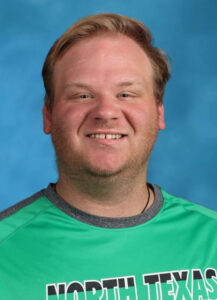
Daniel Ryan Carr, CJE, Ray Braswell High School (Aubrey, Texas)
Why do you want to serve, and how will you help advance JEA’s mission?
I want to serve as a director-at-large because I believe every student deserves access to a strong, independent journalism program, regardless of their school’s size, resources or administrative support. As a journalism adviser and TAJE regional representative, I’ve seen first-hand the impact scholastic journalism has on students. I want to help JEA strengthen its advocacy efforts, expand professional development opportunities and provide advisers with the resources and support they need to build sustainable programs.
What do you think is the greatest challenge facing scholastic journalism education today?
The greatest challenge is the lack of institutional support and understanding of scholastic journalism’s educational value. Programs face budget constraints, staffing challenges, and censorship. Too often, journalism advisers must run programs with inadequate equipment or support but are expected to produce award-winning publications that also serve their entire school communities. We must advocate for funding and equipment for journalism programs as an essential component of public education.
Why do you believe your voice is an important voice or perspective that needs to be heard?
As a relatively young adviser in my sixth year of teaching, I bring the perspective of someone actively navigating the challenges facing today’s journalism classrooms. I advise yearbook, newspaper and broadcast programs at a large Texas public high school, giving me firsthand experience with the demands of multiple publications. Our program is an ELA program in my district, with no funds or resources. Through my involvement with the Texas Association of Journalism Educators, I’ve also worked to connect and support advisers across our region. I believe JEA needs voices representing both experienced educators and the next generation of advisers who will sustain our profession.
Candidate for Director-at-large (2)
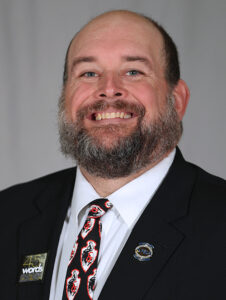
Kyle Carter, CJE, Westwood Baptist Academy (Poplar Bluff, Missouri)
Why do you want to serve, and how will you help advance JEA’s mission?
As a professional journalist for nearly 30 years, I bring field experience into the job the same as I do with my classroom. I also bring with me the knowledge and abilities of small public school students as well as private school students. I’ve been blessed to teach at two wonderful schools, with multiple sets of administrators and various different parental situations. I have been published in some of the largest publications in our country and in the world and I have trained a generation of young journalists to be professional and thorough while in the field.
Traditionally, JEA (at least in my world) has been associated with larger schools — the Kirkwoods and Claytons of the world. I believe that teachers and students from small schools, like Naylor and Chaffee, would GREATLY benefit from the education that JEA can provide. I believe that journalism programs, across the board, are being nixed at high schools every year simply because administrations and boards don’t see the value in what high school journalism students can bring. I want to use my knowledge and experience to help them see that even the SMALLEST of our schools can have a great impact, not only on the world around us, but on our students themselves.
What do you think is the greatest challenge facing scholastic journalism education today?
I believe that journalism itself is going through a major shift. Most people my age don’t watch the news any more. They don’t read a newspaper (and especially are not going to pay for a subscription for it), and they usually try to avoid “the news” when they can. My wife is the perfect example of this. She says that the news just has “bad news” on it for the most part and that it is “depressing,” and I certainly can see her point. Unfortunately somewhere along the way many of those claiming to be reporters and anchors decided to go after the ratings rather than correctly informing their electorate. They decided they needed to be louder, bolder, and thus many of my generation have simply turned them off. And I believe that if we don’t get back to reporting the facts placed in a proper context of humanity for it to be understood, much of our line of work will one day become obsolete.
Now I’m not saying that there isn’t anything we can do about it — there is. But the big corporations that own media companies now aren’t going to like it. Their advertisers aren’t going to like it. It may sound crazy, but we need to get back to telling the truth. We need to get back to telling people how these thoughts, or these laws, or this idea is going to affect them. We need to sway away from appeasing the 1-5% that is screaming and get back to those that break their backs for this country. If journalism and scholastic journalism want to survive, they will need to find a way to latch onto the blue collar worker again.
We are going to need working people, mechanics, plumbers, linemen, nurses, and every other tax-paying U.S. citizen to care, not only about their community, but about how they can help to better that community. THAT is when circulation to newspapers will start going up again. That’s when viewership for the local 6 or 10 o’clock news will start going back up again. Our local television channel cannot be in the “reality television” fight against The Real Houseswives of Atlanta. They don’t have the resources to win that fight. Instead of entertaining, we need to get back to educating. That is a fight that newsmen like Murrow, Cronkite, Rather, Buckley and Sheehan won for many years and one that I believe we can win again.
Unlike many in my line of work, I don’t believe that PDFs and the internet are going to be the downfall of print journalism, either daily or yearly. I believe that turndown is upon us due to apathy and a lack of trust and respect for those who bring that news to us. That is something that we have to get back. That is something we have to EARN back. And until we stop putting five blue women together and calling it The View, or four reds together and calling it Fox News, we won’t have it on a national scale. Someone has to be the one to step forward and make that choice to lead. I talk with my students about this regularly. We must lead. And if we do, people will follow. They will be willing to give us their time and money for the content we create.
Why do you believe your voice is an important voice or perspective that needs to be heard?
I bring experience from many different lines of journalism. I’ve been a journalist for nearly three decades and an educator for nearly 15 years. While I am humble enough to believe that “my voice” is not the one that needs to be heard, I am bold enough to know that someone needs to be in the national conversation for small schools when it comes to journalism education. Someone needs to bring a journalist’s perspective to teaching and educating journalism students. Someone needs to be on the cutting edge with technology in both sports and news production. That’s what I bring to the table.
Candidate for Director-at-large (2)
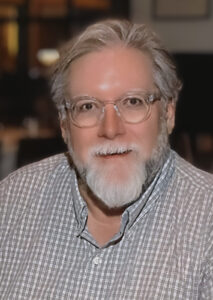
Vincent DeMiero, MJE, Mountlake Terrace High School (Mountlake Terrace, Washington)
Why do you want to serve, and how will you help advance JEA’s mission?
As a lifetime member of JEA, I have been actively involved in scholastic journalism since 1986, and have taught journalism and advised publications at Mountlake Terrace (Wash.) High School since 1988. My service to JEA has always been inspired by the incredible leaders I have been so fortunate to work with and learn from at the national and state level. My deepest passion is scholastic press rights and I have served as a member of the Scholastic Press Rights Committee since 1994. As a director-at-large I will continue my efforts to protect and further the rights of free and responsible student media while also protecting and furthering the rights of journalism educators and advisers. However, I am equally passionate about furthering JEA’s mission to foster, grow and celebrate diversity while also building unity. It would truly be an honor to serve as a director-at-large so that I may give back to JEA as an organization, but most importantly so that I may give back to each of you.
What do you think is the greatest challenge facing scholastic journalism education today?
The greatest threat to journalism – including scholastic journalism education – is the incessant erosion of American democracy, principles, and founding ideals. Most critical, however, are the recent attacks on the First Amendment. Still, I remain hopeful because each day I work with about 36 student journalists who are fired up and passionate about seeking out and reporting truthfully the news of the day. In fact, each fall I give my students a kind of journo-TEDTalk that leads to my closing challenge that is deceptively simple. I tell them that serving as a student journalist is much like being a first responder to the truth, a protector of the language, a purveyor of all that is possible, eyes for those who cannot see, ears for those who cannot hear, and a voice for those who lack the power or access to those in power to speak for themselves. Then I finish by telling them in no uncertain terms that I expect them to master the craft of journalism, and I expect them to save and protect this country. While that may sound daunting, I believe that’s a worthy challenge and that they must first begin by saving and protecting their school community. After all, if not them, then who?
Why do you believe your voice is an important voice or perspective that needs to be heard?
My voice and my perspectives stem from the incredible experiences that journalism has provided me. I hold a bachelor’s and master’s in Communication from the Washington State University Edward R. Murrow College of Communication. I served as a reporter/anchor/producer for an NPR affiliate station, and I produced and engineered hundreds of live sports, entertainment and news programs for more than 10 years. But my greatest experiences have come as a journalism educator and media adviser since 1988. Additionally, I have been a member of the Washington Journalism Education Association and JEA for four decades, and my students and I have attended 60 national conventions, dozens of state conventions and hundreds of workshops. So, yes, I deeply want to share information and skills that all those experiences (and so many more) journalism has provided me. Honestly, though, more important than my voice or my perspective is that as a director I can’t wait to listen. To listen to you, to your students, to active journalists, to experts, and to anyone else who shares our passion for teaching and learning the important craft of journalism.
Candidate for Director-at-large (2)
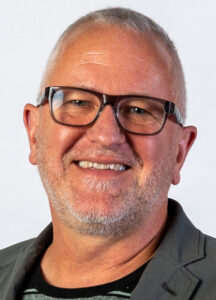
Dr. Timm Pilcher, MJE, Drake University (Des Moines, Iowa)
Why do you want to serve, and how will you help advance JEA’s mission?
As a lifetime JEA member who has been active for 30 years, I have gained much insight and a deep appreciation for the organization and its mission to support free and responsible scholastic journalism. As a scholastic publications adviser for 17 years, I was able to facilitate students’ understanding of the importance of a free and responsible press in maintaining the fundamental tenets of a democratic society, and as a former middle school administrator, I was able to continue the mission of advocating for student voice.
For an at-large member, it becomes increasingly important in this era of progressively skeptical audiences to promote and strengthen the journalism profession, starting with our most important members: students. For the past 30 years I have had the opportunity to present at the regional, state and national levels, advancing scholastic journalism and building a better understanding of its important functions. As a judge at the state and national levels, I have had the privilege of fostering rising programs to encourage and sustain their efforts. Being an adviser mentor and member of the certification committee, I collaborate closely with both advisers and administration to nurture individual programs and facilitate working relationships between advisers and administration, boosting an understanding of the importance of – and lending credence to – the profession and its practitioners, from middle school on.
Along with Sarah Nichols and other secondary and higher education advisers, I helped to create the first-ever Praxis exam for journalism advisers. While no test can ever completely cover the vast amounts of content knowledge advisers need (nor encompass the myriad decisions they will make), this, along with my work on the Certification Committee, continues to prepare advisers to advance their knowledge of the field and take pride in their chosen profession.
Two years ago, when I initially ran, I had no idea of the magnitude of any of the board positions. Now, with that time under my belt, I feel confident that we can move forward stronger and more cohesively as an organization to face the ever-present challenges to free speech and a free press.
What do you think is the greatest challenge facing scholastic journalism education today?
Unfortunately, there is no one “greatest” threat to scholastic journalism, but numerous perils that we face both as a profession and as individuals. The field writ large is fraught with danger, often physical. Reporters are harassed at public events and news organizations’ credibility disparaged on the national stage. Certain pundits, often with no journalistic credentials, ethics or integrity, lambast colleagues and fill the air with misperceptions, untruths and even outright lies.
At the scholastic level, the Student Press Law Center continues to deal with increasingly hostile state governments, university presidents and local school boards. While 18 states have some form of New Voices laws, this year alone, the SPLC saw another 5% increase in requests for assistance over the previous year, now at 39% (SPLC 2026). As aspiring journalists, young students face pressure from their friends, classmates, teachers, parents and community, making their efforts to pursue the facts increasingly difficult.
Our profession’s lack of diversity is another huge concern. A recent Pew study (Mitchell & Gottfried, 2022) found that while there is ample diversity in age in the journalism field, there is a lack of diversity in sexual/gender orientation, race/ethnicity and even political ideology. It is paramount that journalists and journalism educators continue to recruit, train and retain young journalists as not only chroniclers of current events and curators of history, but as the fair and impartial lenses of a continuously more diverse and fragmented populace.
Mitchell, A., & Gottfried, J. (2022, June 14). 6. Journalists give industry mixed reviews on newsroom diversity, lowest marks in racial and ethnic diversity. Pew Research Center. https://www.pewresearch.org/journalism/2022/06/14/journalists-give-industry-mixed-reviews-on-newsroom-diversity-lowest-marks-in-racial-and-ethnic-diversity/
Student Press Law Center. (2026). 2025–2026 Impact Report: Courage in Every Story. SPLC. Retrieved from https://splc.org/impact/
Why do you believe your voice is an important voice or perspective that needs to be heard?
My background in scholastic publications and my current work as an academic advisor in a school of journalism have honed my ability to be an excellent communicator. An executive board member is held to a high standard as a brand ambassador for JEA. This equates to strong professionalism inside and outside the boardroom, and being able to field questions, comments and concerns from members and potential members.
I started working in scholastic journalism over 45 years ago, when my high school adviser Rod Vahl taught me the importance of journalism. After high school, I worked as a United Auto Worker building bulldozers and tractor cabs. When I went to college to become a journalist, I worked 60-70 hours per week as a restaurant manager, lasting three years in school before dropping out. I had been out 10 years when Rod walked into the bicycle shop I was managing. He asked if I had ever finished my journalism degree, to which I replied that, no, he had taught me everything I needed to know. It was then that he uttered the life-changing words: “You ought to be a high school journalism teacher.” I later won the Rod Vahl Iowa High School Journalism Teacher of the Year award named in his honor.
Fast forward 30+ years, and I am ready to facilitate yet another generation of advisers and students with activating their voices. My doctoral dissertation examined the experiences of college journalism students navigating standards-based grading and deadlines, an area essential to our craft. The goal for all of this is to continue to advance the Fourth Estate in comforting the afflicted, and afflicting the comfortable, as it seems we need that now more than ever.
Candidate for Educational Initiatives Director
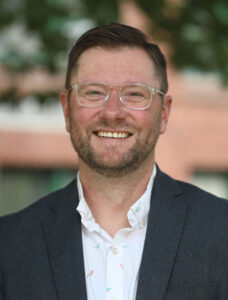
Joseph Maffey, CJE, Lyons Township High School (LaGrange, Illinois)
Why do you want to serve, and how will you help advance JEA’s mission?
Some of the most meaningful learning I have witnessed in more than two decades as an educator has happened when students were doing work that mattered beyond the classroom. Student journalists interview real people, navigate ethical questions without easy answers, collaborate with peers, meet deadlines, respond to an audience and ultimately put their names on work that becomes part of the historical record of their communities.
That is not just good journalism education. It is good education. I want to serve as JEA’s educational initiatives director because I believe JEA should be a national leader in that conversation.
I am a lifetime member of JEA, and the organization has played an important role in my own development as an adviser and educator. I want to contribute to its continued growth and help extend its influence beyond journalism classrooms.
My career has allowed me to approach journalism education from several directions: as an English teacher, student media adviser, journalism educator, and graduate student of journalism education. I want to help build stronger connections between what happens in journalism classrooms and the larger conversations happening in education.
I would focus on making JEA’s curriculum repository an evolving, practical resource that responds to the challenges teachers face now, particularly in media literacy, artificial intelligence and information verification. I also want to strengthen connections with higher education, professional organizations and educators outside traditional journalism programs.
Most importantly, I want JEA to advocate for journalism education not simply because we want strong student media programs, but because the skills of critical thinking, ethical decision-making, collaboration, communication and media literacy that our students practice every day are increasingly essential for every student.
What do you think is the greatest challenge facing scholastic journalism education today?
Artificial intelligence is forcing educators to reconsider some fundamental assumptions about teaching and learning. Journalism educators will have to confront those questions earlier, and perhaps more seriously, than almost anyone else.
The challenge is bigger than whether a student uses AI to write a story. Generative AI complicates authorship, sourcing, photography, copyright, verification and the basic question of what information deserves our trust. At the same time, our students are entering a world in which refusing to engage with AI is no more realistic than refusing to engage with the internet or social media.
Our response cannot simply be prohibition or adoption. We have to teach students to make informed decisions about when these tools are useful, when they are inappropriate, how their output should be verified and disclosed, and what responsibilities remain uniquely human.
A journalist cannot outsource judgment, curiosity, skepticism, empathy or accountability.
This also creates an extraordinary opportunity for journalism education. Students now encounter information in an environment where seeing, hearing or reading something is no longer sufficient evidence that it is authentic. Journalism classrooms already teach students to ask the questions everyone now needs to ask: Who created this? What is the source? How do I verify it? What evidence supports it? What might be missing?
JEA should help journalism educators develop thoughtful, adaptable curriculum around AI, but we should also look beyond our own classrooms. AI literacy is now inseparable from media literacy, and journalism educators have expertise the rest of education urgently needs.
Why do you believe your voice is an important voice or perspective that needs to be heard?
I bring 25 years of experience as a classroom teacher and student media adviser, with a career that has consistently bridged journalism education, English education and student media. I currently teach AP Literature and Composition, have taught Journalism: Yearbook Production for nine years and have been a co-adviser of the school’s art and literary magazine for the past 16 years.
My academic and professional experiences have prepared me particularly well for the work of educational initiatives director. I hold a master’s degree in Journalism Education from Kent State University as well as two master’s degrees from North Central College: one in Curriculum and Instruction and another in Educational Leadership. Together, those programs have allowed me to study journalism pedagogy and media literacy alongside curriculum development, instructional practice, educational policy and leadership.
I also understand what it means to represent educators and build consensus around issues that affect them. For four years, I served as president of the Lyons Township Education Association, an experience that required me to listen to educators with different needs and perspectives, advocate on their behalf and work with school leadership to address complex issues.
My work in journalism education extends beyond my own classroom as well. I am a Certified Journalism Educator, have worked as judge for JEA, National Scholastic Press Association and National Council of Teachers of English Recognizing Excellence in Art and Literary Magazines and regularly present at journalism conventions. I lead a yearbook program of nearly 50 students and advise a nationally recognized literary magazine.
I would bring to the JEA board the perspective of a practicing teacher and adviser, journalism educator, mentor and experienced teacher-leader who understands both educational policy and the realities of implementing it in classrooms.