

On Jan. 28, 2026, student journalists and advisers got a “major win for student journalists,” according to the Student Press Law Center. It’s a big deal.

The entrance to the art wing at Lowell High in San Francisco, Ca. taken by Blackjack48 in the Public Domain.
California’s laws that protect students’ First Amendment rights to free expression were affirmed, and school administrators who would try to justify silencing students were politely slapped.
What happened in San Francisco’s Superior Court showed that the old tactics used by administrators to cover up suppressing student voices and punish their advisers was not going to be tolerated. This case started in 2025 when students published some stories that displeased the Lowell High School’s administration. Friction ensued, and in March the adviser, Eric Gustafson, was told that he would be reassigned away from the journalism program he’d advised for eight years, despite his most recent review giving him an “Outstanding” rating, the highest possible.
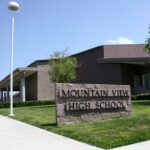
Mountain View High School Photograph taken by Bahn Mi of the Schoolwatch Programme and released freely under the Creative Commons Attribution ShareAlike 2.0 license.
Meanwhile in nearby Santa Clara County, a similar case saw action on Jan. 28. The broad strokes of the case are similar to the Lowell case: the principal was unhappy with what students were publishing and reassigned the adviser and shut down the introductory journalism class. The case is slightly different in that the administration said the reassignment was justified because the adviser, Carla Gomez, did not have a Career and Technical Education certificate, and the new adviser did. The lawsuit, brought by Gomez and two former editors, claims that this was just a justification for punishing the adviser and students. The parties had been in mediation since 2025, but on Jan. 28 they agreed to go to trial. The trail date is set to begin March 12.
The Lowell case was important in that it focused on protections for advisers. California was the first state in the nation to give students First Amendment protections for free expression. The 1977 law (and a 2009 follow up) give student media advisers protection from retaliation based on what their students publish. The law, known as “48907” and “The California Free Expression Law,” has served as a model for so-called New Voices laws in other states.
These two cases are examples of administrators trying to go around the laws that protect students and advisers. Advisers and students should be aware that just because laws are in place doesn’t mean they can’t be violated. Knowing organizations like SPRC and SPLC available for assistance and how to contact them is key.
Get legal help from Student Press Law Center here.
Or contact the Scholastic Press Rights Committee at our Panic Button here.
Read more from SPLC about the Lowell case here.
Written By: Tripp Robbins, MJE